

The Peace Offering
How the Third Levitical Sacrifice Points to Restored Fellowship with God Through Sacrifice

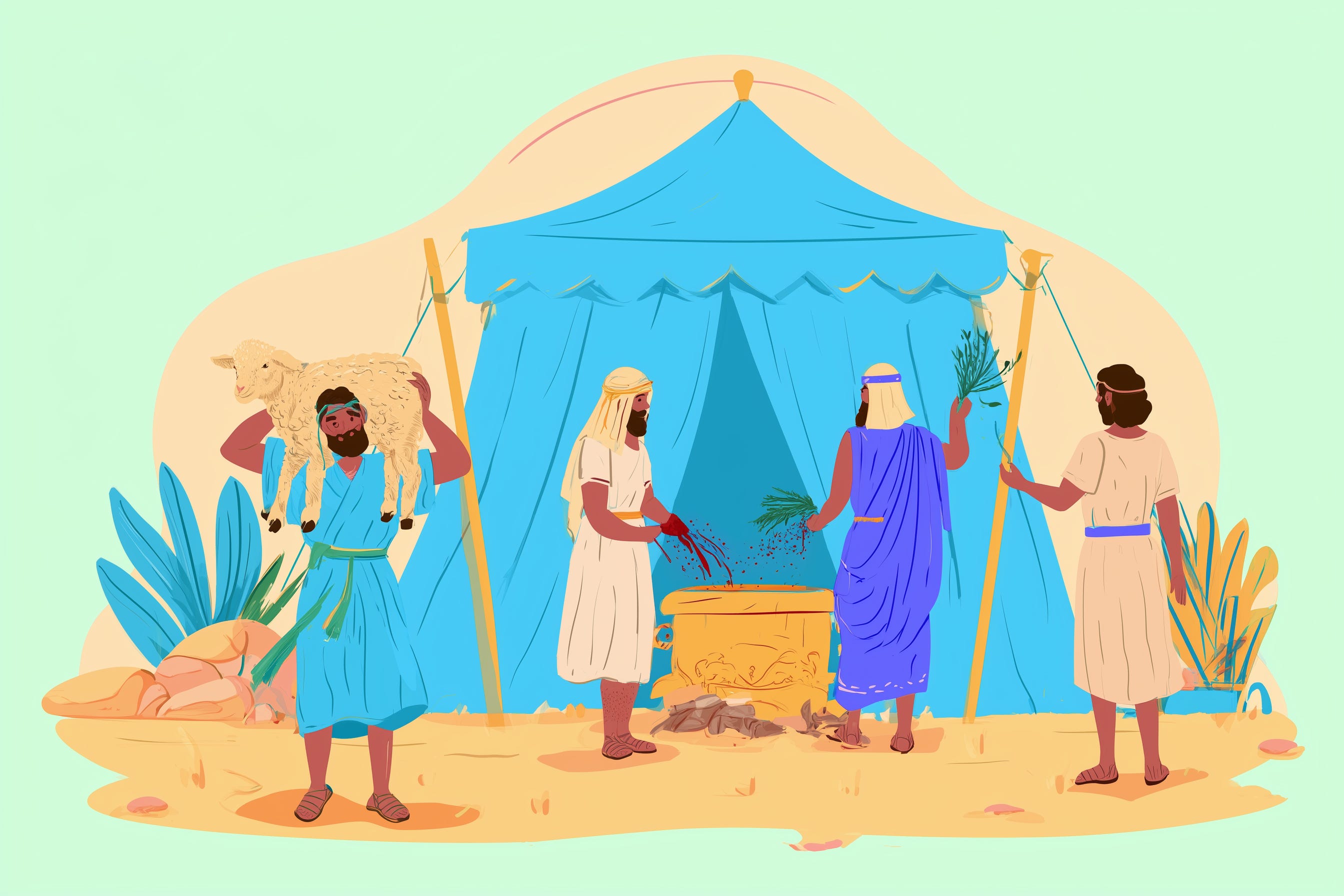
The mountain still trembled with the glory of God. Smoke curled upward from Sinai like a pillar between earth and heaven, and the people below had already heard the voice that made them shake with holy fear. To any observer, it looked like death to approach the God who inhabited to peak of Sinai. Then Moses built an altar at the foot of the mountain, set up twelve pillars for the twelve tribes of Israel, and young men offered burnt offerings and sacrificed peace offerings of oxen to the Lord. Blood was gathered in bowls, thrown against the altar, and sprinkled upon the people as Moses declared, “Behold the blood of the covenant that the LORD has made with you in accordance with all these words” (Exodus 24:4–8).
Then something astonishing happened. Moses, Aaron, Nadab, Abihu, and seventy of the elders of Israel went up, and there, beneath the feet of the God of Israel, was something like a pavement of sapphire stone. Scripture says they beheld God, and “they ate and drank” (Exodus 24:9–11). That is incredible. At the mountain where the people feared they might die if God spoke again, God invited representatives of His covenant people to eat in His presence. The altar smoked below them. The covenant had been sealed in blood. And the meal became a picture of peace.
What kind of God brings sinners near enough to eat with Him?
What kind of sacrifice turns fear into fellowship?
And what does it mean that, in Christ, the God who once met Israel at Sinai now invites us to His table?


The Offering of Peace
Leviticus 3 introduces what many English translations call the peace offering, or the sacrifice of well-being. The Hebrew word behind it comes from the same family as shalom, a word far richer than the absence of conflict. Shalom speaks of wholeness, restored order, covenant harmony, and life as God designed it to be lived. So when an Israelite brought a peace offering, he was not merely performing a ritual. He was approaching God with a sacrifice that celebrated fellowship.
